
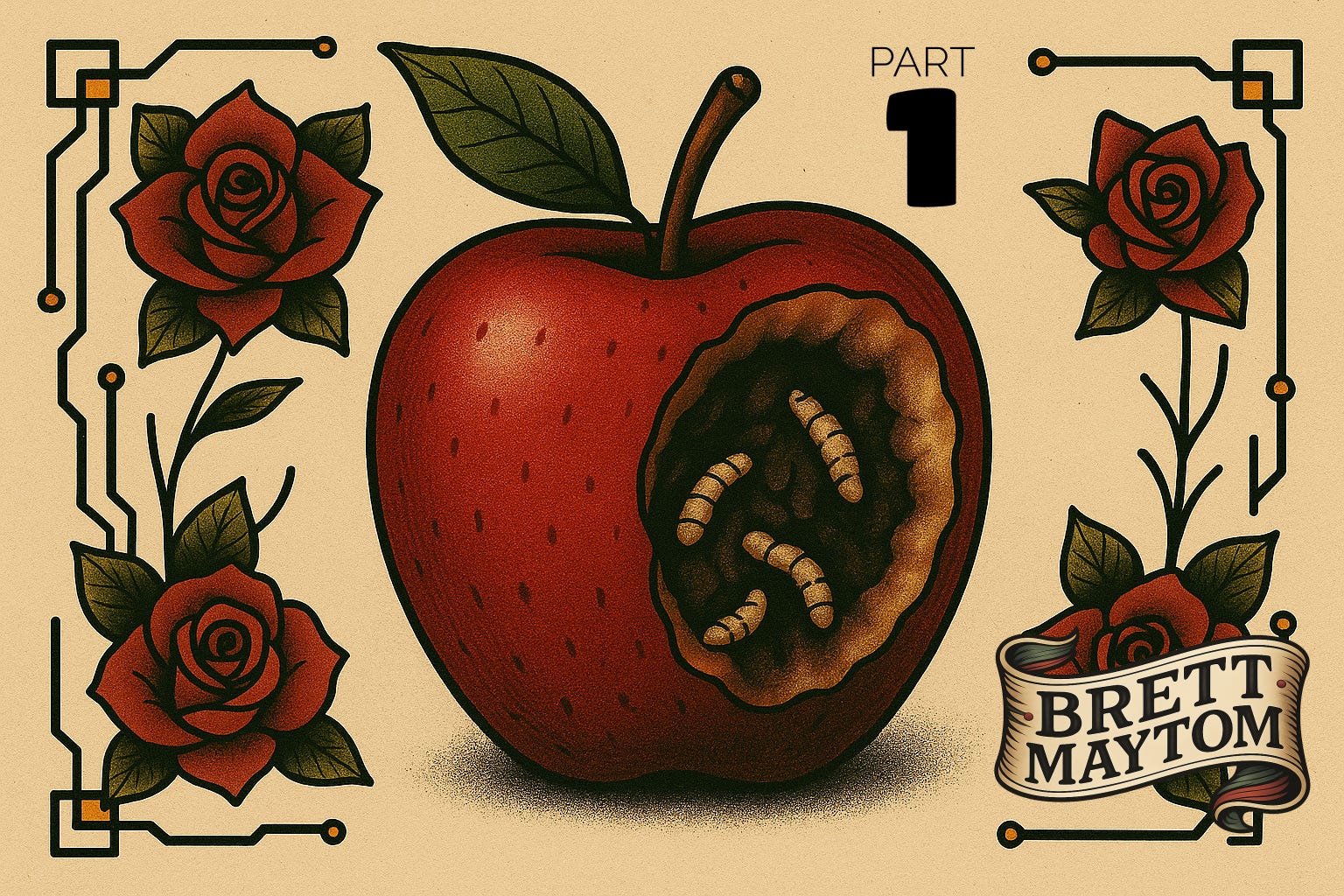
A while ago, I wrote a series about rotten agile, and I thought I was done. Nope, I am not done, as there are more systemic issues in the marketplace.
Rotten Agile is not caused by bad intent, lazy teams, or a lack of training. It is caused by a simple and persistent failure: Agile is adopted as a method rather than built as a set of habits.
Most organisations that claim to be Agile have installed the visible parts. Ceremonies exist. Boards exist. Roles exist. Tooling exists. What does not exist are the repeatable behaviours that make those things matter.
This is the habit gap, and it explains why Agile so often looks busy but delivers very little.
Agile does not fail at design. It fails at repetition.
Agile practices are not complicated. The problem is not understanding them. The problem is doing the right thing consistently when it is inconvenient.
Examples are everywhere.
Teams know they should slice work thinly, yet under pressure, they revert to large batches.
Teams know they should integrate frequently, yet integration is delayed until the end.
Teams know they should expose risk early, yet bad news is softened or hidden.
Teams know retrospectives should change behaviour, yet the same issues reappear sprint after sprint.
This is not hypocrisy. It is habit dominance.
Under pressure, people do not act on what they know. They act on what is habitual. In most organisations, the dominant habits were formed long before Agile arrived.
Rotten Agile preserves old habits behind new language
One of the most damaging patterns in Rotten Agile is linguistic substitution.
Project managers become Scrum Masters, but the habit of driving delivery through control remains.
Requirements documents become backlogs, but the habit of upfront certainty remains.
Status meetings become stand-ups, but the habit of reporting upward remains.
Phase gates become sprint reviews, but the habit of approval seeking remains.
From the outside, Agile appears to be present. Underneath, nothing fundamental has changed.
This is why Rotten Agile often feels exhausting. Teams are asked to perform new rituals while maintaining old behaviours. That creates friction, not flow.
The marketplace reinforces this failure
The Agile marketplace does not accidentally produce Rotten Agile. It is structurally aligned to do so.
Frameworks, certifications, and maturity models are easy to package. Habits are not.
Training scales. Behaviour change does not.
Rollouts are visible. Habit formation is slow and quiet.
So success is defined as adoption rather than outcome.
An organisation is considered Agile because teams are “doing Scrum,” not because they can reliably deliver small increments, make fast decisions, or learn from evidence. When those outcomes do not appear, the solution offered is usually more coaching, more ceremonies, or a new framework.
Very rarely is the system itself challenged.
Habits require system change, not motivation
Habits form when behaviour is repeatedly rewarded by the system.
If teams are rewarded for predictability, they will avoid uncertainty.
If leaders punish bad news, the risk will likely be hidden.
If funding is annual and fixed, learning will be delayed.
If decisions require escalation, autonomy will never develop.
No amount of Agile training overrides this. The system always wins.
Rotten Agile persists because organisations ask teams to behave differently while keeping incentives, governance, and authority exactly the same.
That is not a transformation. It is a theatre.
Why does this damage trust in Agile
When Agile is implemented without habits, it produces a specific kind of failure.
Delivery feels chaotic but slow.
Meetings increase, but decisions do not.
Teams feel accountable but powerless.
Leaders feel uninformed despite more reporting.
Eventually, someone says, “Agile doesn’t work here.”
What they usually mean is this: we installed Agile practices, but we never changed how work actually gets done.
Agile then becomes associated with frustration rather than effectiveness. That reputational damage is deserved, but it is misattributed.
What unrotten Agile actually looks like
Healthy Agile is boring to watch and powerful in effect.
The same small behaviours happen every week without drama.
Risks are raised early because nothing bad happens when they are.
Work gets smaller because that is how success is achieved.
Decisions are made where information lives.
Feedback changes behaviour because it is acted on immediately.
These outcomes are not driven by mindset. They are driven by habit.
And habits only form when leaders redesign the system to make the right behaviour the easiest behaviour.
The uncomfortable truth
Rotten Agile survives because it lets organisations avoid the hardest work.
They can talk about agility without changing power.
They can adopt frameworks without changing incentives.
They can blame teams instead of redesigning systems.
As long as Agile is sold as a method to adopt rather than habits to build, Rotten Agile will continue to thrive.
Not because people do not care.
But because the system rewards appearance over behaviour.
At its core are principles, but more importantly, deliberate habit-forming mechanisms that focus on slow, repeatable behaviour. Not transformation theatre. Not framework implementation. Just the disciplined formation of new habits over time.
More to come on this.