
What Is the Principle?
The Win-Win-Win Principle means this:
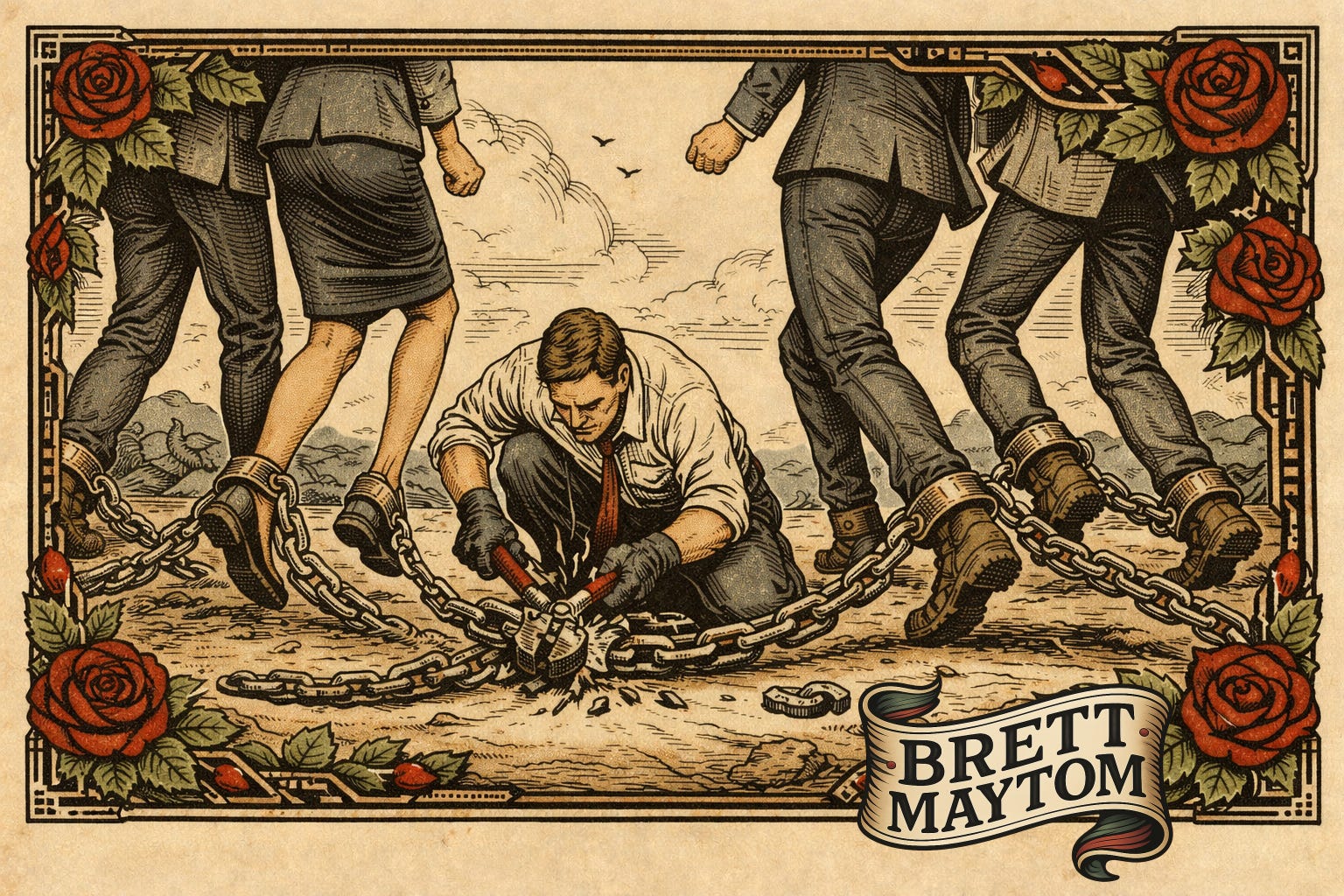
When leaders remove obstacles that block delivery, the team wins, the customer wins, and the organisation wins.
It sounds simple, but it is rarely practised. Most leaders are trained to observe, manage, and report, not to intervene and resolve. They supervise the pain but don’t step in to fix what’s causing it.
True leadership means creating the conditions where delivery can succeed. That doesn’t happen from the sidelines. It happens when leaders take ownership of the environment in which their teams are working.
When you actively help teams succeed:
The team wins because they are unblocked, trusted, and supported.
The customer wins because real value gets delivered.
The organisation wins because it gains momentum, credibility, and results.
This principle isn’t about being nice. It’s about being useful.
The Spiral of Passive Leadership
Dysfunction often begins with a subtle but damaging pattern: passive leadership. Here’s how it plays out:
1. The manager stays in observer mode
The team raises a blocker. The manager listens, nods, and moves on.
“This is your problem to live with.”
No ownership. No outcome.
2. The problem is converted into a process
Instead of solving it, the issue gets wrapped in structure:
“Let’s track it.”
“Make sure it’s on the board.”
“We’ll review it next sprint.”
Now it’s visible, but it’s still there.
3. Control replaces ownership
Leaders increase involvement, but not responsibility:
More meetings
More updates
More check-ins
They’re close to the issue but not in it.
4. Pushback becomes a deflection
The team asks for help. The response:
“That’s governance.”
“That’s not in our control.”
“That’s the process.”
No escalation. No trade-off decision. Just a dead end.
5. The team is told to adapt
With no change coming, the team is told:
“Be pragmatic.”
“Work around it.”
“That’s just how it is.”
They now carry the blocker and the pressure.
6. Pressure increases, but leadership doesn’t
As outcomes slide, management tightens:
Shorter timelines
Tighter reviews
“Where’s the plan?”
Still, the blocker remains.
7. Inaction becomes normal
Because the problem is “tracked,” no action is taken.
It becomes part of the system. A tolerated dysfunction.
The Cost: A Vicious Cycle of Control and Frustration
This doesn’t lead to silence. It leads to something worse: overcontrol without resolution.
The issue remains visible. It frustrates the manager. They lean in more:
More tracking
More oversight
More demand for status
But they still don’t take ownership of fixing it.
The team is now under pressure to deliver within a broken system. Leadership feels helpless and irritated. They keep managing the problem but never resolve it.
And when the issue persists, frustration turns into resentment.
This is the cycle:
The team is controlled but unsupported.
The manager is involved but ineffective.
The problem stays stuck.
Everyone knows it. No one owns it. And the damage compounds.
Applying the BEEEE Cycle™
Most leaders believe they support their teams. They believe they are enabling delivery. They believe they are clearing the path. But belief doesn’t equal behaviour.
The BEEEE Cycle™ is not just a product or process tool. It is a way to test your leadership in real-world conditions.
Ask yourself:
Expose – Are blockers actually being surfaced? Or have people stopped raising them because they’ve learned nothing changes?
Examine – When problems come up, do you investigate the root cause? Or do you listen politely, nod, and move on to the next meeting?
Explore – When a team needs help, do you actively look for options with them? Or do you default to “That’s not in our control”?
Enact – Are you taking personal action to remove constraints? Or just supervising the team while they struggle to work around them?
Boost – When blockers are removed, do you publicly show that raising issues makes a difference? Or do you quietly move on? Are you looking to take your solution to the next level?
This is not a checklist. It’s a leadership audit.
If your answers to these questions are mostly no, the issue isn’t team maturity. It’s leadership avoidance.
The BEEEE Cycle™ doesn’t just improve delivery; it also improves the customer experience. It reveals whether you’re actually doing your job.
How to Practise the Principle
Start here:
Ask every team you lead: “Is there anything I can help remove that’s getting in your way?”
Then prove you mean it by acting on what they say.
Also:
Pick one unresolved issue and own it fully. Don’t track it, fix it.
If the process is the blocker, challenge it.
Celebrate real examples of blockers being removed so teams know it is worth speaking up.
Final Word
Your job is not to supervise struggle. Your job is to remove the obstacles that stop your team from delivering.
Don’t manage the problem.
Own it. Resolve it. Lead through it.
That is what your team needs. That is what the work demands.
Start there.
The best leaders aren’t measured by how well they monitor, but by how quickly they remove what’s in the way.
Practiqual® is a modern leadership approach for working in complex environments.
It is grounded in principles that make sense, not rituals or slogans.
The Win-Win-Win Principle is not mandatory in Practiqual®. But if you’re serious about leading well, it is a principle you are highly encouraged to live by.
Because when your team wins, your customer wins. And so do you.